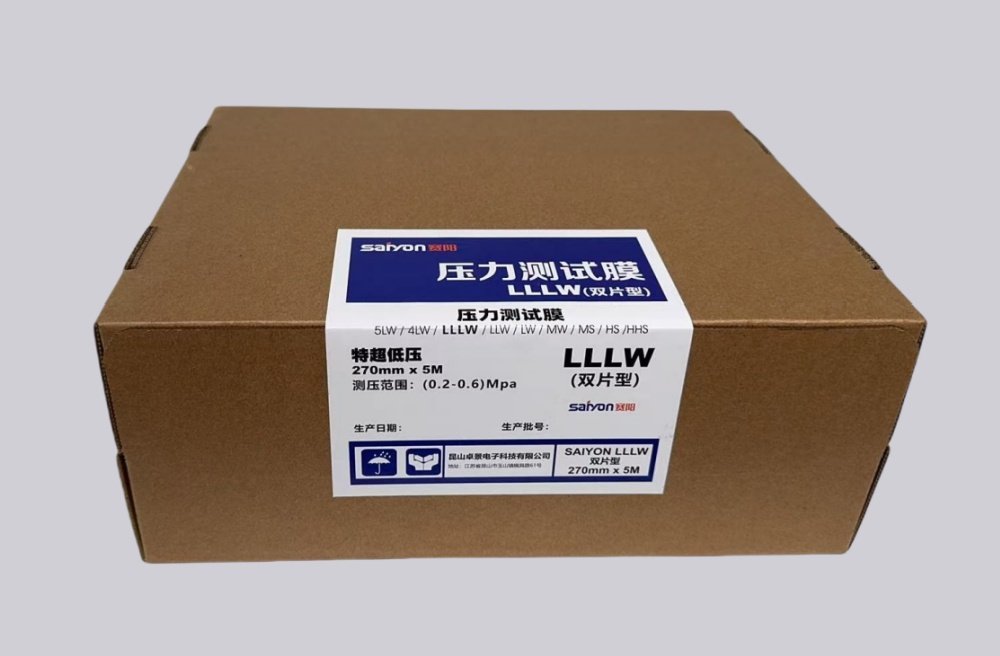


Pressure film selection is often discussed in terms of pressure range, but roll size also affects real testing work. In many cases, width and length determine whether the material can be used efficiently, whether the contact area can be covered properly, and whether repeated testing remains practical.
The first size factor is width. Roll width matters because it defines how much of the contact area can be covered in one piece. If the film is too narrow, the user may need to cut multiple sections or reposition the material, which increases handling complexity and may reduce consistency. If the film width matches the interface better, testing becomes simpler and more reliable.
The second factor is length. Roll length affects how many tests can be performed and how the material can be planned over time. A short roll may be enough for occasional inspection, while a longer roll is more practical for repeated testing, development work, or production-side verification. In routine use, length influences both efficiency and waste control.
Size also matters in cutting practice. Pressure film is not always used in full-width sections. In many applications, the material is cut to fit specific geometries. A suitable roll size makes this easier and reduces unnecessary offcut. An unsuitable size may still work, but it often makes the process less efficient.
Another point is storage and handling. Larger rolls may offer better continuity for repeated use, but they also require careful storage and cleaner handling discipline. Smaller formats may be easier to manage in low-volume work. So size is not only about the test surface. It is also about how the material fits the workflow.
Users sometimes overlook size because they assume any roll can be cut to suit the job. Technically that is true, but in practice it is not always the best approach. Width and length influence convenience, repeatability, and material economy. These are real engineering concerns, especially when testing becomes routine rather than occasional.
A practical way to choose roll size is to ask three questions. How large is the contact area? How often will the test be repeated? How much cutting flexibility is needed? These questions usually provide a better answer than choosing size by availability alone.
Pressure film is a functional testing material, not just a consumable. That means its size should be selected with the same care as its pressure range. When width and length match the actual testing method, the film is easier to use, easier to manage, and more likely to support stable results.
how to choose pressure film range
pressure film size example (LLLW)
ultra-low pressure film format
standard low pressure film size
medium pressure film roll size