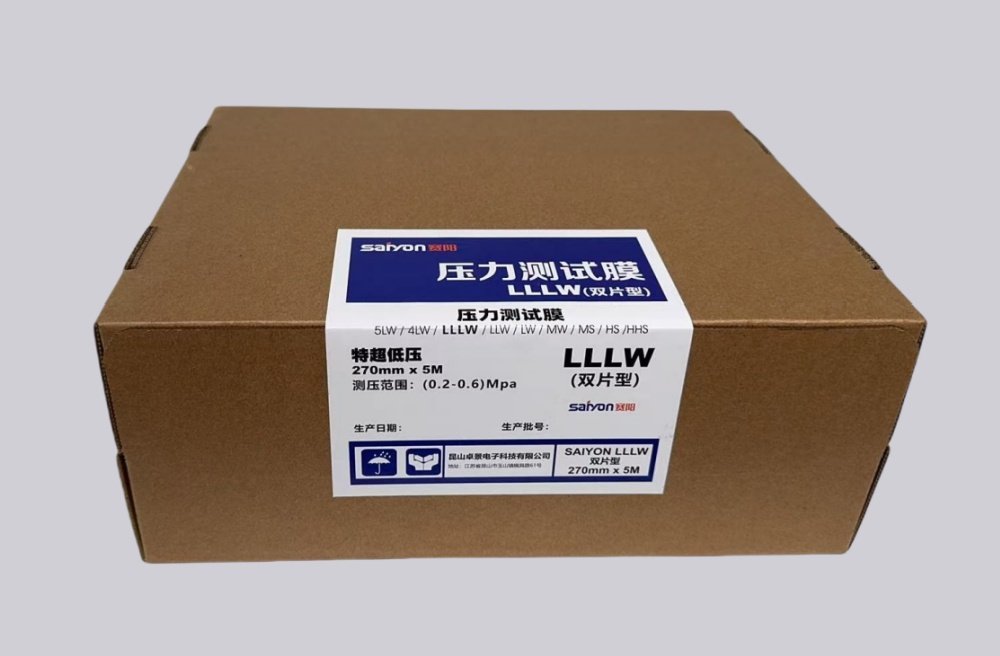


The difference between two-sheet and mono-sheet pressure film is not only a product detail. It affects handling, test method, and how the pressure result is produced in practical use. For users selecting pressure film for the first time, understanding this difference can prevent unnecessary confusion later.
A two-sheet film uses two separate layers during testing. One layer contains the pressure-sensitive component, and the other carries the developer layer. When pressure is applied, the two layers work together to produce a visible image. This structure is common in many traditional pressure measurement film systems.
A mono-sheet film combines the required function into a single sheet. The advantage is simplicity. There is no need to align two separate layers during use. In some applications, this can make handling easier and reduce the chance of setup error.
In practical testing, the biggest difference is workflow. Two-sheet film requires correct sheet pairing and correct orientation. That means users must pay more attention during preparation. Mono-sheet film is generally more straightforward to place, which can be helpful in fast testing or where handling simplicity is important.
However, simpler handling does not mean that mono-sheet is automatically better. The right choice depends on the application, the pressure range, and the testing environment. In some cases, two-sheet film remains the standard because it aligns better with the intended measurement method or available product range.
Another difference is how users think about storage and use. Two-sheet film requires both components to remain in suitable condition. Mono-sheet film reduces that particular concern, but it still requires careful storage and handling like any pressure-sensitive material.
A common mistake is to assume that sheet structure is only a packaging issue. In reality, it changes how the material is prepared, applied, and interpreted in testing. This is why the user should not choose only by pressure range. Film structure should also be considered.
The most practical way to decide is to begin with the testing method. If the work requires a familiar, standard two-layer process, then two-sheet film may be the better fit. If handling convenience and simpler placement are more important, mono-sheet film may be more suitable, provided the pressure range and application also match.
In short, the difference between two-sheet and mono-sheet pressure film is a difference in structure, handling, and workflow. The right choice is the one that fits the application and supports stable testing practice.
how to choose pressure film type
pressure film handling mistakes
what is pressure sensitive paper LLLW
two-sheet LLLW pressure film
LLW pressure film structure