

Reading pressure film results correctly is just as important as selecting the right film. A visible image alone is not the final answer. What matters is how that image is interpreted in relation to the actual contact condition, test setup, and evaluation goal.
The first thing to understand is that pressure film shows distribution, not just force. After loading, the developed image gives a map of where pressure exists and how it varies across the contact surface. Darker areas usually indicate higher pressure, lighter areas indicate lower pressure, and blank areas often suggest little or no effective contact.
In practical testing, the first reading step is not numerical. It is visual. Before trying to estimate pressure value, the user should look at the overall pattern. Is the contact continuous or broken? Is the pressure concentrated at the edge, center, or one side? Are there obvious weak-contact zones? In many industrial tasks, this first visual judgment already answers the most important question.
The second step is to compare the image with the intended application. For example, a sealing interface often requires more even contact than a simple support interface. A pattern that appears acceptable in one application may be unsuitable in another. This is why pressure film results should never be read in isolation from the actual test purpose.
The third step is consistency. If the same part or process is tested repeatedly, the result should be compared across samples rather than judged as a single image only. Pressure film becomes much more valuable when it is used to compare before-and-after adjustment, different assembly methods, or repeated production conditions.
Users also need to remember that color density is affected by handling and test conditions. Surface contamination, premature pressing, environmental conditions, and reading timing can all influence the image. A poor reading is not always caused by the wrong part. Sometimes it is caused by the wrong test process.
Another common mistake is trying to read too much from a result that is outside the suitable film range. If the image is barely visible or fully saturated, the problem may be range mismatch rather than unusual pressure behavior. In that case, interpretation should be cautious.
When more detailed evaluation is needed, the developed image can be compared with the appropriate reference scale or analysis method. But even then, the user should keep the practical purpose in mind. The value of pressure film is not only that it can show pressure, but that it helps users understand contact behavior in a clear and decision-oriented way.
A good pressure film reading is therefore not only about seeing color. It is about connecting the visible pattern to the real mechanical condition of the interface.
choose the correct pressure film range
common mistakes in pressure film testing
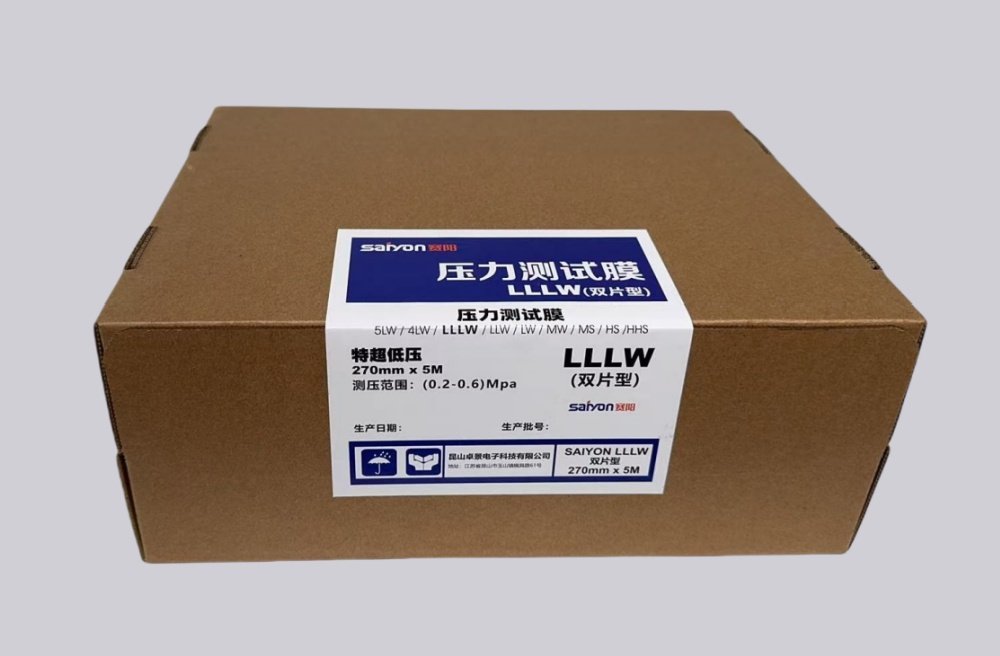
LLLW pressure film example
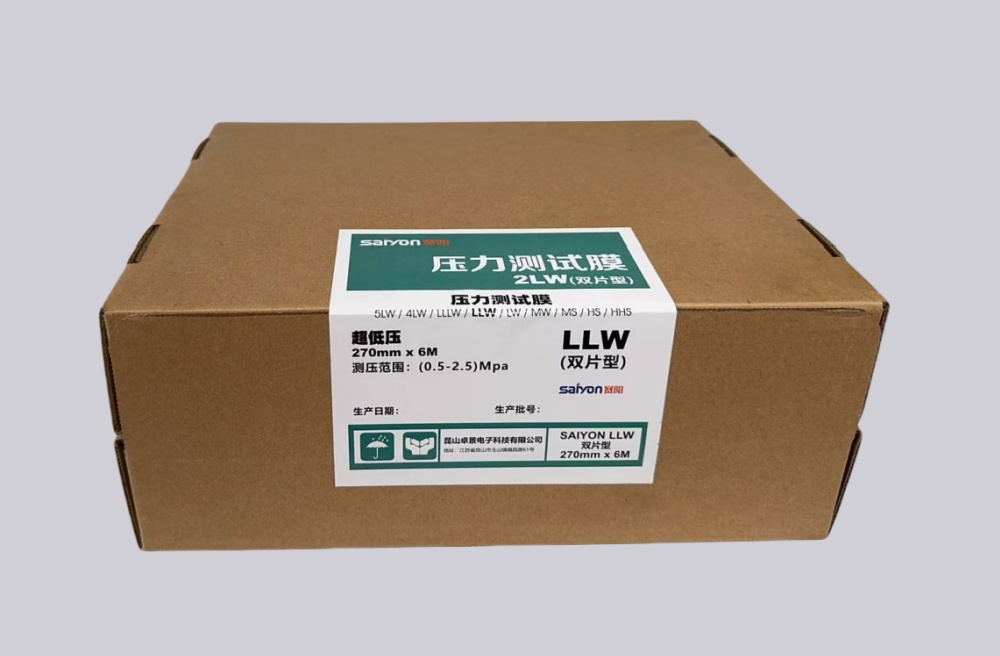
LLW pressure film application
LW pressure film reference