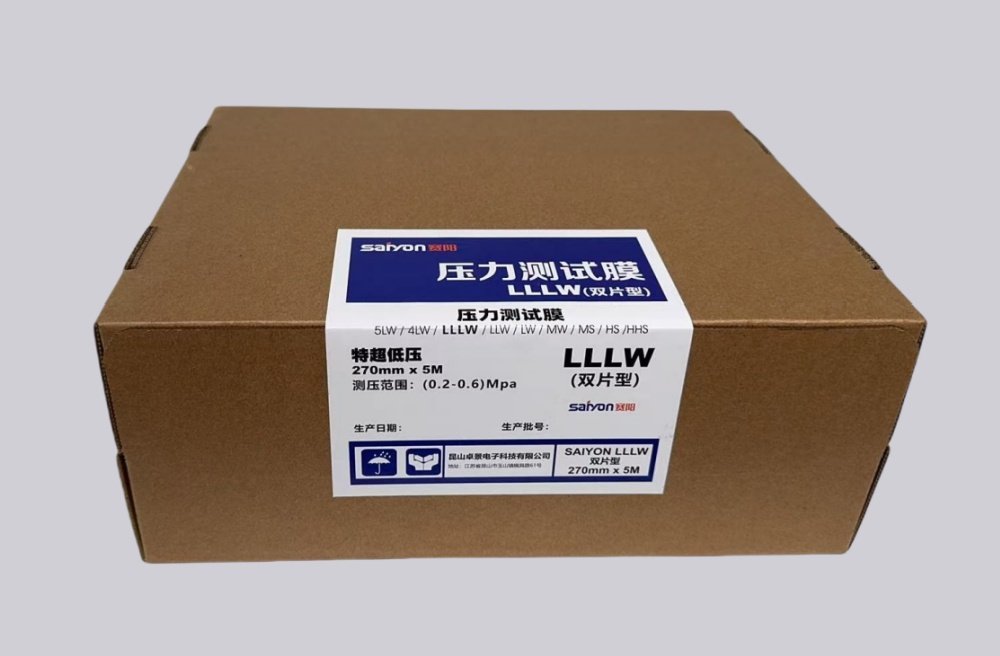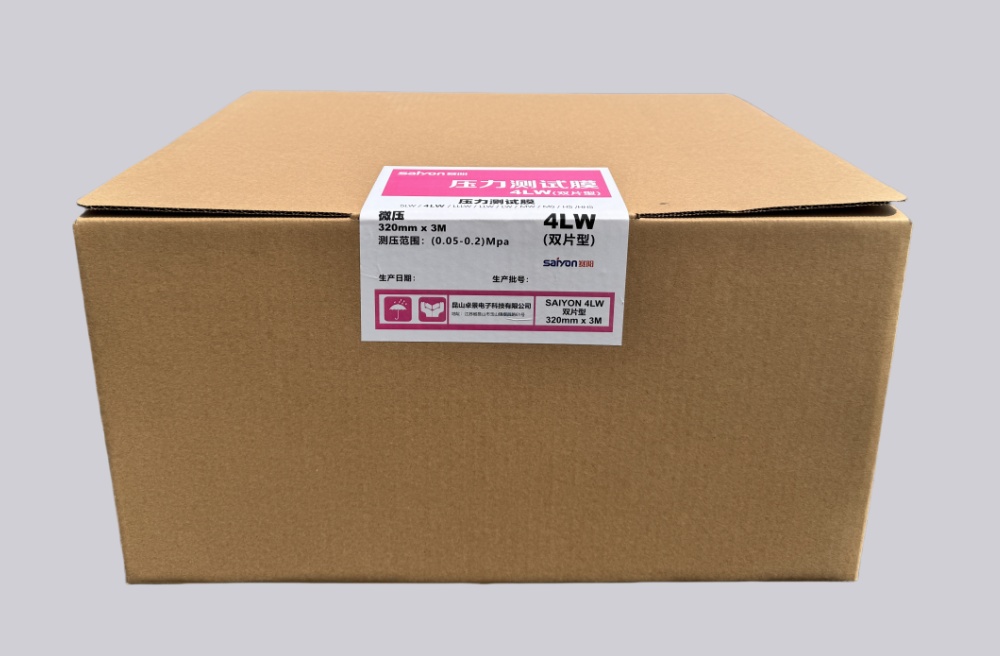


The keyword LLLW Fujifilm usually comes from a more direct and practical search habit. Instead of typing a formal product phrase, users often enter the model and brand in reverse order when they are trying to identify the film quickly, confirm its application, or compare it with other pressure measurement film options.
In real purchasing and testing work, this kind of search often appears when the user already has partial information. They may have seen the model in an old record, on a package, in a technical discussion, or in a previous quotation. At that stage, what they really need is not branding alone, but a clearer understanding of what the film is used for and whether another pressure film with a similar working range can be considered.
LLLW generally refers to an ultra-low pressure film used for contact pressure evaluation where the applied load is relatively light. This is the type of measurement used when pressure distribution needs to be seen directly across the contact area. In these applications, the film is not mainly used to measure large force. It is used to reveal interface behavior that may otherwise remain hidden.
This matters because low-pressure contact is often more difficult to judge than it first appears. A part may look properly seated, but actual contact may still be uneven. A sealing surface may appear closed, yet pressure may remain weak in some regions. A soft contact material may respond under load, but the real pressure distribution may still be inconsistent. In these situations, a visible pressure pattern is more useful than general assumptions based on assembly force.
That is why users who search LLLW Fujifilm are often not just asking “What is it?” They are asking a second question as well: “What can be used for this kind of testing?” This is where equivalent pressure film options become relevant.
Equivalent options are not selected by name alone. They are selected by whether they can perform the same practical task. For this kind of ultra-low pressure film, the first selection point is pressure range. If the intended test falls within the same working band, the film is at least technically relevant. If the pressure range does not match, then the comparison is no longer useful.
The second point is film structure. For pressure distribution testing, users often expect a film type that develops a visible image under load and can show variation across the contact surface. If the replacement follows a similar measurement logic, it is easier to compare in actual work.
The third point is readability. A practical pressure film must produce a result that is clear enough to support engineering judgment. If the image is too faint, too unstable, or too difficult to interpret, then the film may not be suitable even if the nominal range appears close.
The fourth point is supply format and practical handling. Size, roll length, storage condition, and general usability all matter in repeated testing. A film may look acceptable in theory, but still be inconvenient if it does not fit the actual work process.
This is why an equivalent pressure film option can make sense. In routine testing, engineering evaluation, internal inspection, and development work, users often need a film that can achieve the same practical purpose rather than reproduce every label exactly. If the alternative fits the pressure range, uses a workable film structure, and provides readable contact distribution results, then it may already be suitable for the application.
At the same time, selection should still be careful. If the film is being used in a strictly controlled validation process or a documentation system tied to one exact source, then substitution should be evaluated more cautiously. The decision should always reflect the purpose of the test, not only the convenience of supply.
A common mistake in this kind of search is to focus only on the model wording and not on the testing task. The better approach is to begin with the actual application. Confirm the required pressure level, the kind of contact surface involved, and the clarity needed in the final pressure pattern. Then compare film options based on those factors.
So, the keyword LLLW Fujifilm is best understood as a practical entry point into a larger selection question. It points to an ultra-low pressure measurement film used for visible contact pressure evaluation, but it also opens the door to comparing other pressure film options that may support the same testing purpose. For many users, that is the more useful question to answer.