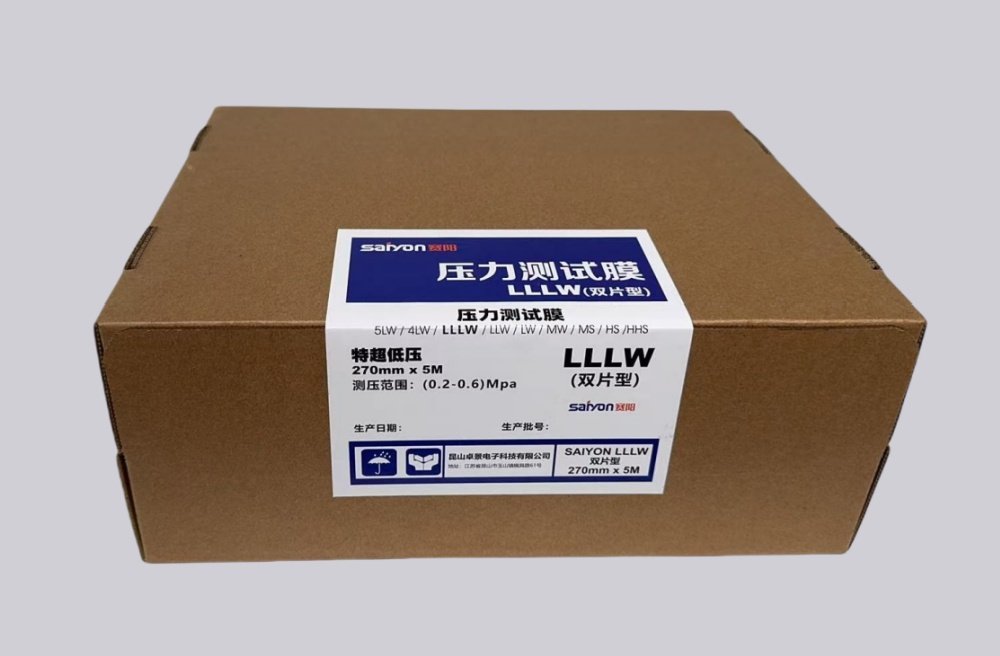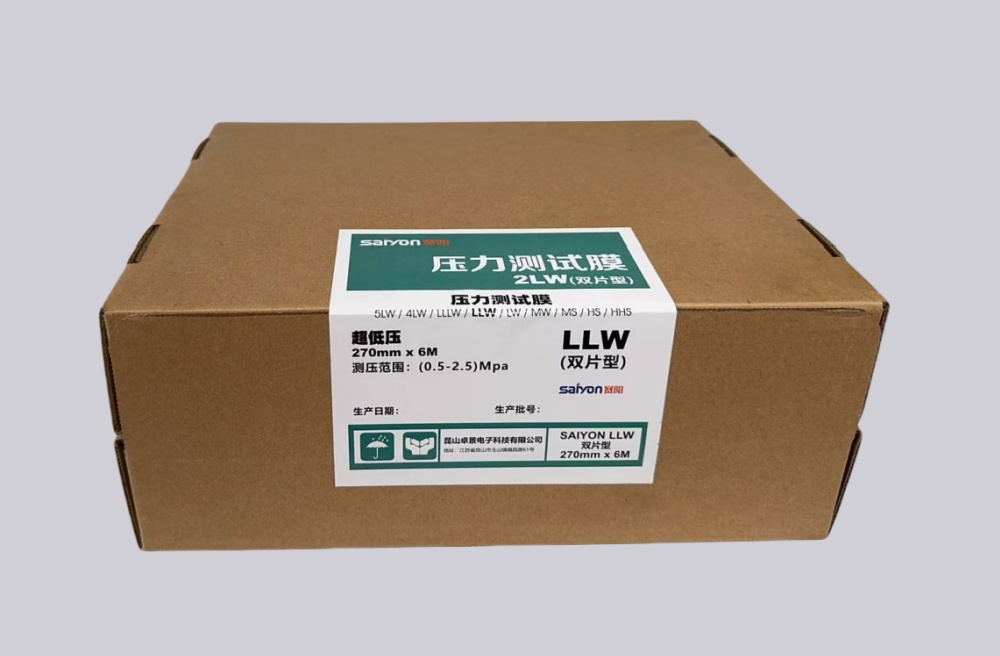


When users search for Fuji Prescale Film LLLW, they are usually looking for more than a product name. In many cases, they are trying to confirm the pressure range, understand the intended application, and decide whether an equivalent pressure measurement film can be used for the same testing task.
This kind of search often appears in practical engineering work. A user may already know the original film type, but the real question is whether the same pressure testing objective can be achieved through another film option with a comparable pressure range and similar pressure indication behavior. That is why this topic is better understood as a selection question rather than a simple product lookup.
What LLLW Usually Means in Practical Testing
LLLW is generally associated with ultra-low pressure measurement work. At this level, the test is not focused on heavy compression. The purpose is to reveal subtle pressure distribution across a contact surface where the applied load is relatively light.
This is important because many contact problems do not happen under high pressure. They happen when the interface looks closed, but the real contact is incomplete or uneven. A sealing surface may appear properly assembled, yet some areas may still have weak pressure. A soft material may appear fully engaged, yet local contact may remain inconsistent. In these situations, ordinary force values do not clearly show the true contact condition.
Ultra-low pressure film is useful because it turns invisible interface behavior into a visible pressure pattern. Instead of judging contact only by assembly force or appearance, users can directly observe where pressure exists, where it is weak, and where it is concentrated.
Why Equivalent Pressure Film Options Matter
In actual purchasing and testing work, users do not always need one exact product label. What they need is a film that can complete the same practical task.
An equivalent pressure measurement film becomes relevant when users want to compare supply options, reduce procurement difficulty, improve availability, or evaluate whether another film can support the same type of pressure distribution testing. In this context, the word “equivalent” does not mean identical in every detail. It means functionally suitable for the same category of testing work.
For ultra-low pressure applications, this is a reasonable and common approach. Engineers often care more about whether the film works within the required pressure band and provides a readable pressure map than whether the branding is exactly the same.
What Should Be Compared in an Equivalent Film
The first point to compare is pressure range. This is the most important filter. If the film does not operate within the same low-pressure band, further comparison becomes less useful.
The second point is film structure. In this category, many products are based on a two-sheet system. Pressure causes the active layer to react and produce a visible image on the developer sheet. If the alternative follows the same basic logic, the testing method is easier to compare.
The third point is image readability. A practical pressure measurement film should develop a result that can be interpreted clearly enough for real testing decisions. If the image is too weak, unstable, or difficult to judge, the film may not be suitable even if the pressure range looks close on paper.
The fourth point is handling behavior. Ultra-low pressure films are more sensitive than many other industrial materials. Storage condition, contamination, surface cleanliness, and handling before use can all affect the final image. So a substitute should not only match the nominal range, but also remain usable under normal testing conditions.
The fifth point is supply format. Width, roll length, and general product form matter in daily work. A film may be acceptable in theory but inconvenient in practice if the size does not fit the target testing area or cutting requirement.
When an Equivalent Option Makes Sense
Equivalent pressure film options are often reasonable for routine testing, internal verification, assembly inspection, incoming quality checks, development trials, and maintenance work.
In these situations, the main objective is practical. The user wants to know whether pressure is present, whether it is evenly distributed, and where contact changes across the interface. If an equivalent film can provide that information clearly enough, it may already meet the requirement.
This is especially true when the test result is used for internal engineering judgment rather than strict brand-locked documentation.
When Selection Should Be More Careful
Not every application should move directly to an equivalent option.
If the testing method is tied to a formal customer requirement, an internal approval standard, or a fixed validation document, then the substitute should be reviewed more carefully. Even when the pressure range looks similar, users may still need to confirm acceptance criteria, internal consistency, and reporting requirements before changing the film source.
This does not mean an equivalent film is unsuitable. It simply means the selection process should follow the actual level of control required by the project.
Common Mistakes in This Type of Selection
A common mistake is to compare only names and ignore the actual testing condition. Pressure film is selected for a working purpose, not for the label alone.
Another mistake is to focus only on nominal range without checking film structure, readability, and handling sensitivity. In ultra-low pressure work, a product that looks correct by specification may still perform poorly if it is not handled properly or if the result image is not clear enough for interpretation.
A third mistake is to assume that all alternatives behave the same. Even when two films are intended for similar pressure ranges, users should still consider practical factors such as film response, usability, and fit with the existing test method.
A More Practical Way to Choose
The most reliable method is to begin with the application rather than the product name.
First, define the actual pressure range required by the test.
Second, confirm whether the film type matches the intended measurement method.
Third, review size, supply format, and handling conditions.
Fourth, evaluate whether the developed image is readable enough for the decision that needs to be made.
If the film can show contact pressure distribution clearly and support the intended evaluation logic, then it is already close to what the application requires.
This approach is more useful than comparing labels alone, because it focuses on testing results rather than brand wording.
Conclusion
The keyword Fuji Prescale Film LLLW often leads to a broader engineering question: what kind of pressure measurement film is needed for ultra-low pressure testing, and can an equivalent option be used for the same task?
In practical work, the answer depends less on product name alone and more on pressure range suitability, film structure, image readability, handling stability, and fit with the real application. If those points are checked properly, equivalent pressure measurement film options can be a reasonable and practical choice for many low-pressure contact evaluation tasks.